A couple of years ago, MrMr and I were lucky enough to find a local farmer with spring lambs available and we had the chance to sit down and talk to the farmer, Cecil. What had started out as a short trip to the farm turned into a long afternoon discussing farm life and comfort foods that had us back home far more hours later than we had originally intended.
One of the things I promised Cecil while we were chatting was that I would start working on a lamb stew recipe that differed quite a bit from the very traditional beef stew (or venison stew) served by midwestern farmers in the US. Most seem to rely heavily on the very traditional ingredients of carrots, onions, and potatoes. All are certainly plentiful as root storage crops in Michigan at that time of the year, but I wanted something a little different. Thus, the birth of this recipe.
I haven’t come close to finishing this recipe yet, so check out the ingredients notes and the notes on things I might play with to find out what I’m thinking about changing.
Working recipe: Lamb stew with fig and lemons
Ingredients
- 2 1/2 lbs lamb meat cut into 1-1.5” chunks
- salt and pepper to taste
- 2+ tablespoons regular olive oil
- 1 lb white onions, sliced thinly
- 1 small, salt-preserved lemon (about the size of a ping pong ball), sliced very thinly
- 4 cloves of garlic, minced or grated
- 1 teaspoon grated fresh ginger
- 1/4 teaspoon ground cinnamon
- 1/8 teaspoon ground cayenne pepper
- 1 3/4 cups diced tomatoes with their juices (or about 14.5 ounces or 1 can if you buy them)
- 1 cup dried figs, stems removed, finely chopped (about 4 ounces)
- 2 1/2 cups flavorful vegetable, lamb, or chicken broth
Instructions
Brown the meat and set it aside.
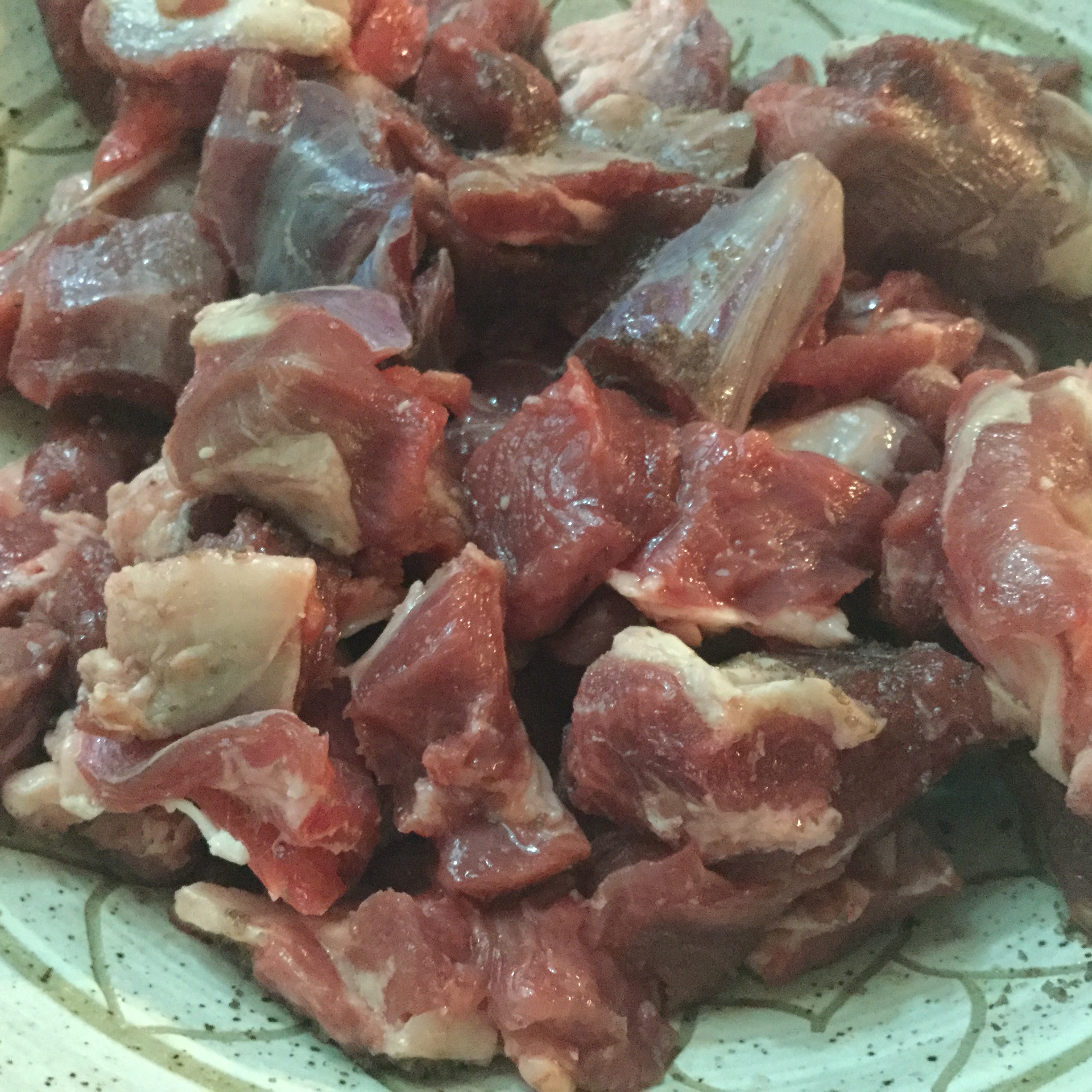
- Sprinkle the lamb chunks with salt and pepper to taste.
- In a large, heavy pot, heat the oil over medium-high heat until it shimmers lightly.
- Working in small batches, brown the lamb chunks, adding more oil as necessary. Each batch should take about 5 minutes to brown on all sides.
- Transfer the browned lamb to a container and set aside.
- Pour off all but 1 tablespoon of fat from the pot and reduce the heat to medium.
Soften the onion, add the spices, then add the rest of the ingredients.
- Add the thinly sliced onions to the pot and sprinkle with more salt and pepper.
- Sauté the onions until they’re just beginning to brown, typically about 5 minutes.
- Add the lemon, garlic, ginger, cinnamon, and cayenne pepper and stir with the onions for about 1 minute until everything is evenly distributed.
- Add the tomatoes with their juices and scrape up the browned bits that have stuck to the bottom of the pan by now.
- Add the figs, then add the lamb you set aside being sure to pour in any lamb juices that have pooled while the meat was resting.
- Add the broth.
- Give everything a good stir to mix it up in the pot.
Let the stew cook for 1.5 hours, stirring occasionally.
- Bring stew to boil, then reduce the heat to medium-low and cover it, leaving the lid slightly ajar.
- Simmer everything for about 1 1/2 hours, stirring occasionally.
- If the stew looks too dry at any point, add a bit more broth (no more than 1/4 cup at a time).
- Check the seasonings and adjust with more salt or pepper as necessary.
- Serve it forth.
Ingredients notes
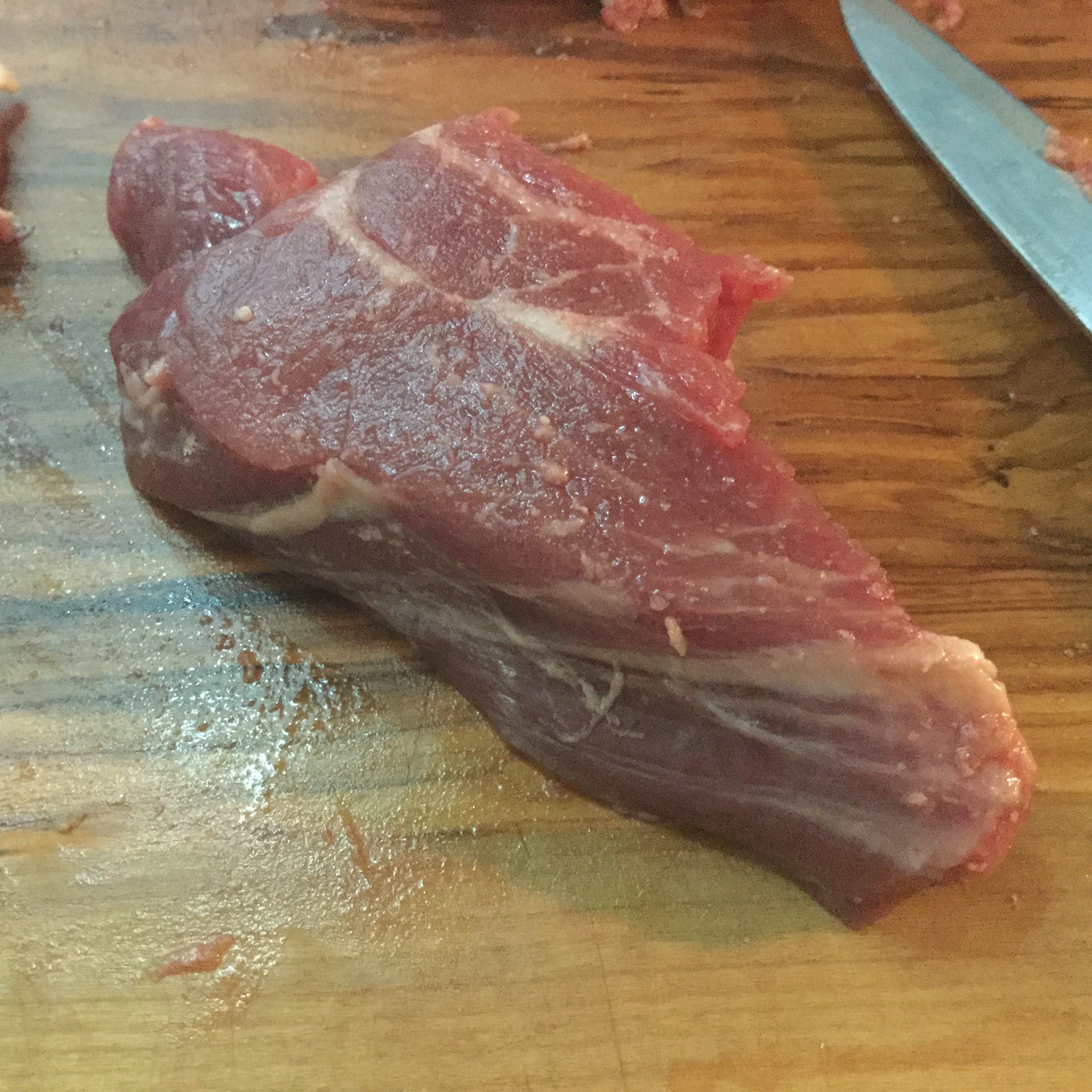 Lamb. Choosing a cut of meat is always one of the toughest. Most people will go for standard lamb stew meat when they make this recipe. It works well, it’s fairly easy to get at the grocery store or butcher, and you don’t usually have to do much cutting. While I’ll make the stew with the standard lamb chunks you get as a byproduct of lamb processing, I prefer to portion my own most of the time. That usually means I end up sacrificing some of the shoulder chops into stew meat instead.1
Oil. Regular olive oil is a staple in our house. We don’t typically stock extra virgin in our house because we prefer more flavor from our oil. If we want something lighter, we’ll use safflower most often. But for this stew, the olive oil works well.
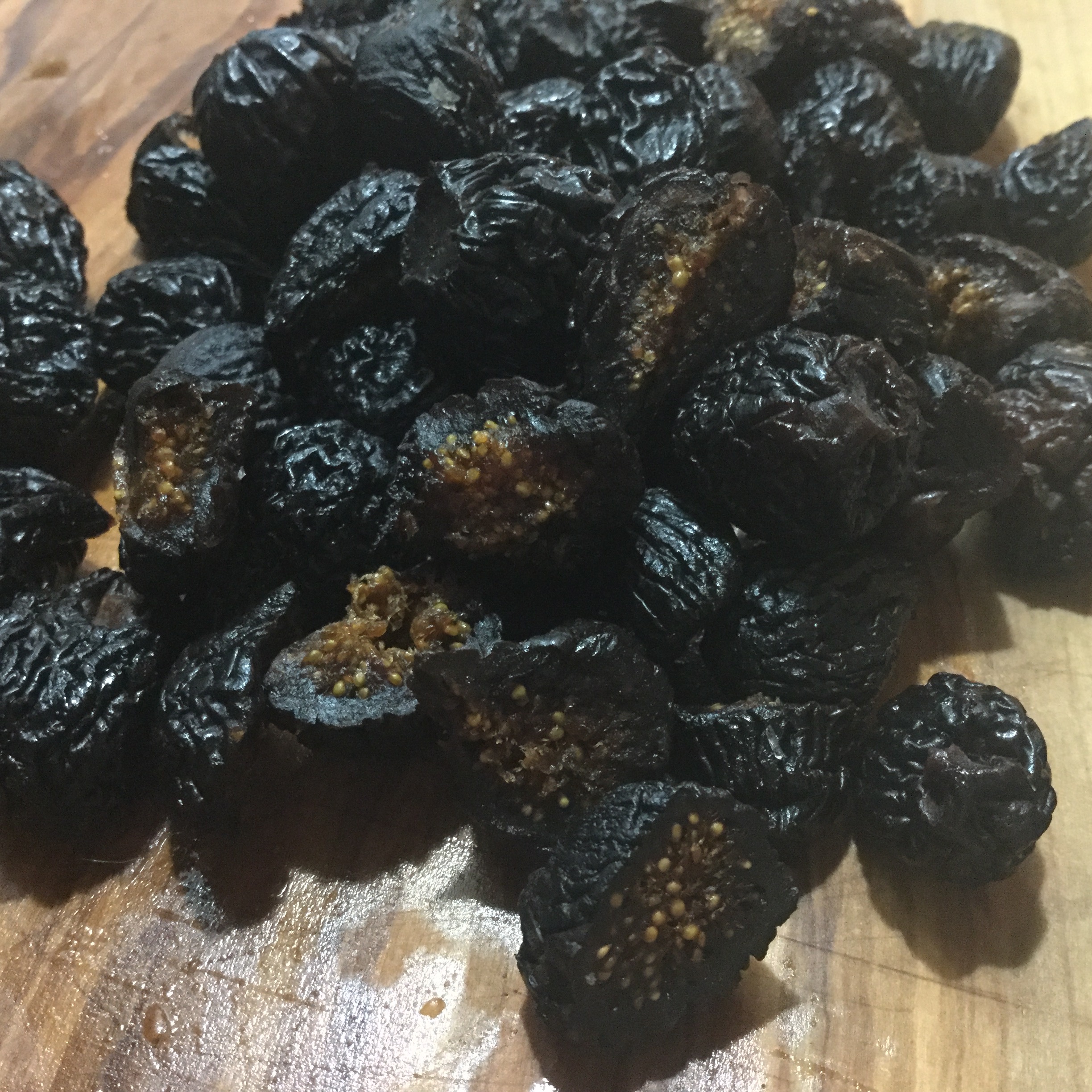 Figs. The figs we grow in our yard are Brown Turkey figs.2 Fresh figs don’t work well with this recipe, however because the flavor isn’t concentrated enough. I end up drying the figs a while and storing them away in a jar for later use. When I use them in this recipe, I finely chop them because I don’t like to get a giant mouthful of fig with my lamb. I prefer the lamb to stay in the forefront.
Lemons. When we have a surfeit of lemons, we typically have a few days where we go crazy with cocktails. However, to keep our livers happy and safe, we preserve them. Most of the time I end up candying them for gifts during the holidays. But every so often I’ll salt preserve them for recipes like this one. If you’re not fortunate to be able to preserve these yourself, I’ve had great luck finding preserved lemons in just about every grocery store near me in the foreign foods section (though I’m lucky to have a vibrant community of other cultures with niche grocery stores all over as well that sell these).
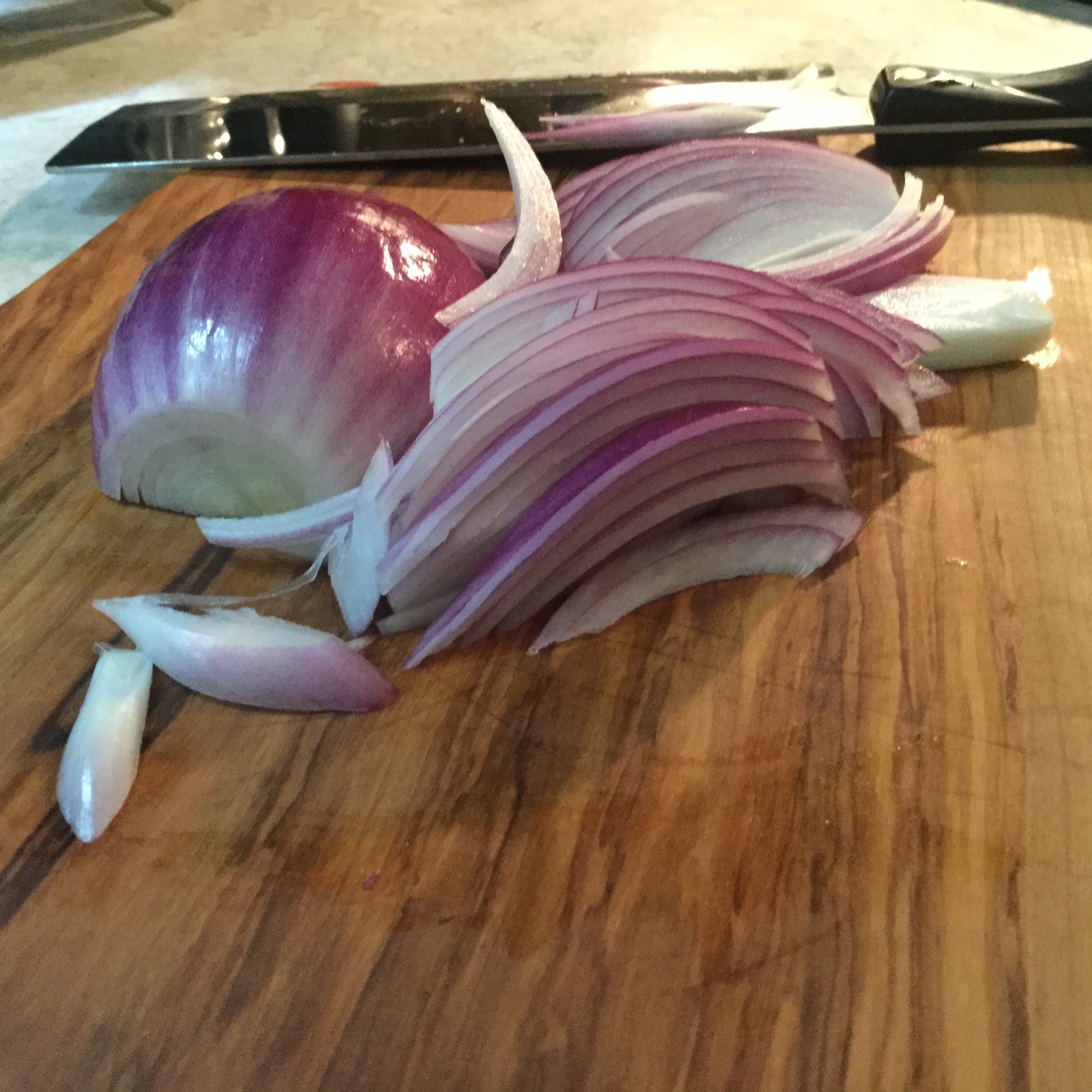 Onions. Normally I don’t use purple onions for stews because they have a tendency to look gray once the final cooking is complete. I used them in this recipe because I happened to have them on hand and when all was said and done, they had effectively melted into the stew because of how I sliced them. I liked that aspect of the stew a lot. Big chunks of onions would have been distracting. Even little bursts of onion would have been annoying. This shaped made the onions more part of the gravy than anything else.
Tomatoes. You can easily use fresh tomatoes for this recipe if they’re in season. Remember to cut them on a surface where you can save the juices if they’re really fresh. The stew will benefit from them. If you use canned tomatoes, find some that are lower in salt. You’ll have enough from the seasonings as they are. If you can’t find lower salt tomatoes, consider reducing the amount of salt you add overall, keeping in mind that your broth is likely to have a considerable amount of salt in it as well unless you make that yourself as well.
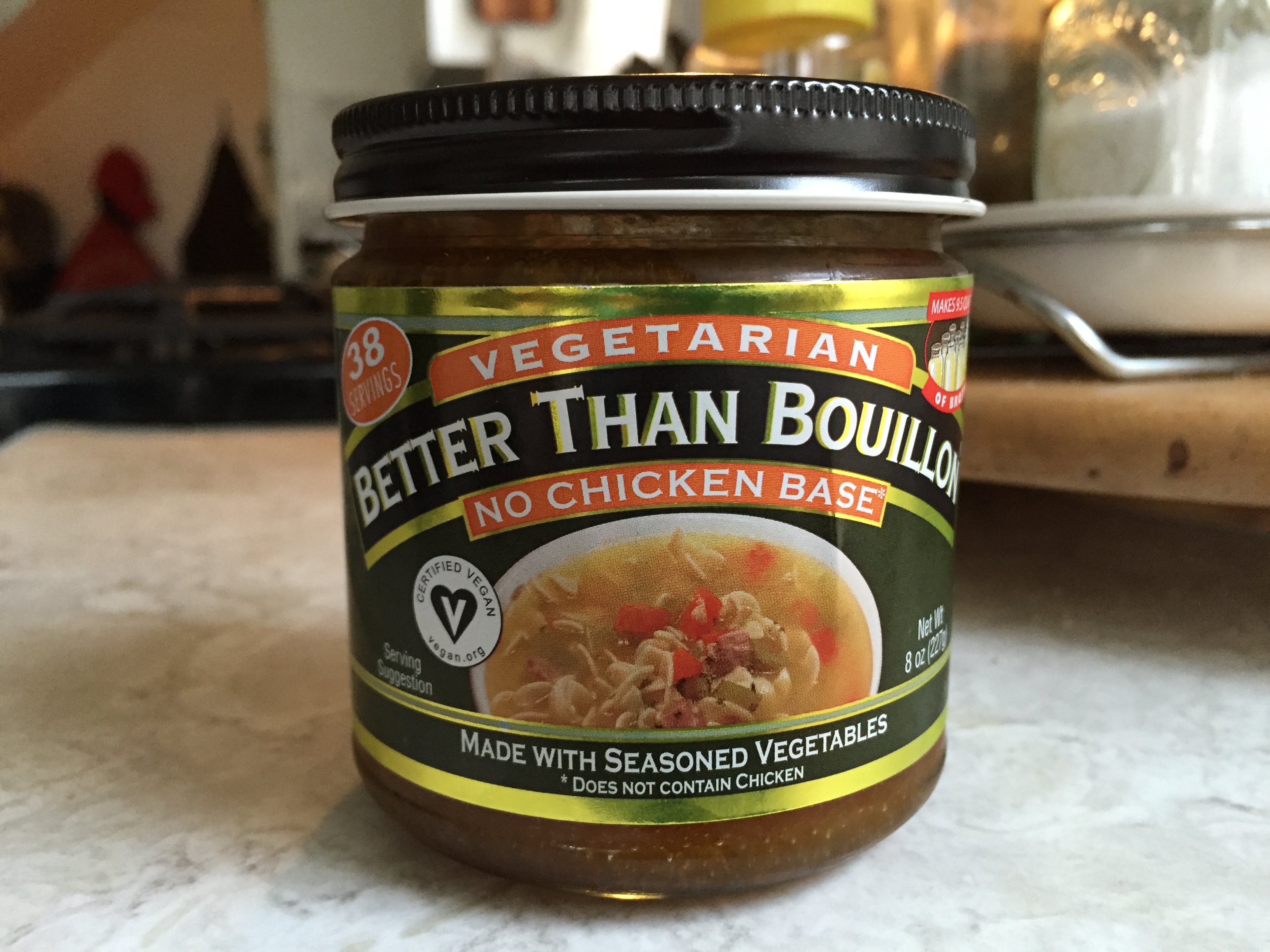 Broth. Ah, vegetable broth. This is a tough choice. There aren’t many good ones out on the market, in my opinion, but I’m notoriously picky. Most are flat or weak in flavor, so I usually make mine and and freeze it. But every so often, I run out so I keep emergency instant broth on hand. I like Better Than Bouillon because it comes in a container that takes up less room in my cupboard and fridge.
Things I might play with
Cutting the richness. Even with the addition of the salted lemon, the dish is very rich. I like it, but I think it needs to be cut just a bit. A little shot of lemon juice itself might be something to try. Vinegar would work. A little garnish of something acidic might be an option as well, perhaps a creme fresh or a nice whole milk yogurt.
Adding saffron. I’ve had a few people suggest that I add saffron to the dish. Frankly I can’t see myself doing this because of the expense. I don’t have enough experience cooking with the ingredient other than as a color enhancer for rice and when I have used it, I’ve not been impressed with the metallic undertones the spice seems to impart. We’ll see though. Enough people have suggested it that I can’t discount it entirely.
Adding some other spices. The spicing is actually very good for this dish but I’m wondering if I should add a couple of more. Some common choices would be cumin and coriander as a nod to the Middle Eastern roots of the recipe. I haven’t played with this aspect much, so I have some experimentation to do.
-
We’re not big meat eaters in our household, to be honest, preferring to eat mostly plants. I like to refer to it as economic vegetarianism. When we do eat meat, however, we have a few preferences. We want the animal to come from a source we know personally if we can’t hunt it ourselves. We’d love to be able to visit the farm where it was raised to check out the conditions. And if at all possible, we’d like to talk to the farmers themselves to find out their philosophy on feeding and harvesting or butchering. ↩
-
Fig trees don’t normally survive through the winter outside in Michigan. Brown turkey fig trees specifically can survive down to 17F for periods of time above ground. What we usually end up doing is placing the entire tree on a rolling cart and overwintering it in our garage. The older Italian families in southeast Michigan go one step further and do what’s called “graving” where they bury the plant in a shallow grave for the winter and cover it with brush or old shingles. Look for yards with an oddly placed 5 gallon white bucket, held down by a brick. ↩